
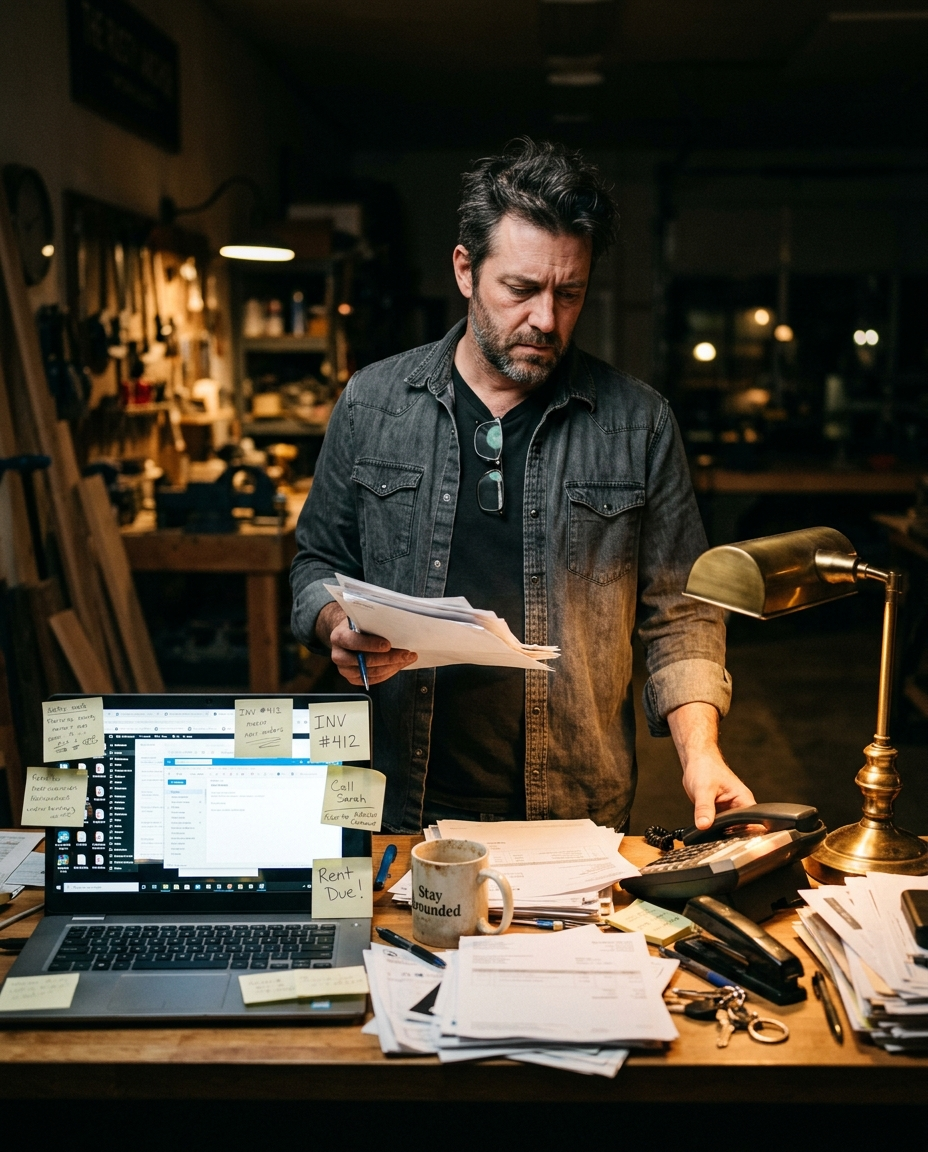
Restaurant marketing that fills tables
and keeps the margin.
The phone rings through service. The DMs pile up. The reviews sit unanswered. And the orders that do land arrive through an app that keeps a cut of each one. None of that is a staffing failure — it is four separate systems that were never wired to each other.
Indianapolis, Indiana - serving businesses across the U.S.
Eight leaks on a Friday night.
None of them are the kitchen.
You have already nailed the hard part — the food and the room. Every one of these happens while the kitchen is doing its job perfectly.
The 6:40 rush eats the calls
The phone rings at 6:40 on a Friday and nobody is free to reach it. That caller wanted a table for six. Most callers don’t leave a message — they call the place two doors down. The table you lost never rang twice.
Fixed by an AI phone agent that picks up mid-rush →Takeout orders are taken by hand, one at a time
A phone order is a person at the till with a handset against their shoulder, reading the menu out loud and writing an address on a pad while a queue builds behind them. That is service time being spent on data entry.
Fixed by ordering that happens on your own site →The apps keep a cut — and they keep the customer
Third-party ordering bought you reach and kept the relationship. You don’t hold the phone number, the order history, or the margin. On a quiet Tuesday that is a partnership. On a full Saturday it is rent.
Fixed by direct online ordering, running alongside the apps →The DMs go unread
The booking request was on Instagram, under a reel, at 11pm. So was the question about the patio, the one about parking, the one asking whether you cater, and the one asking for a set menu for twelve.
Fixed by social and DM handling that treats a request as a request →Invisible when someone asks an AI where to eat
“Where should we eat near here” is increasingly a question people put to a model rather than to a map. It answers from pages, menus and reviews it can actually read. A menu that is a PDF or a photograph is a menu the model cannot read.
Fixed by AI search visibility and a menu written as text →Hard to find on the map, too
Hours right on one profile and wrong on another. A Google Business Profile nobody has touched since it was claimed. A category that says “restaurant” when what people actually search is “Italian deli”.
Fixed by local SEO and a profile that is maintained →No-shows on a Friday
A four-top that does not turn up at 7 is a four-top you cannot resell at 7:15. A confirmation the day before, and a reminder two hours out, is the cheapest thing on this page.
Fixed by confirmations, reminders and a waitlist that works off your own book →Reviews sit there — the good ones too
The bad ones sit there. The good ones sit there too, which is nearly as expensive — a review with a reply is the one prospective diners read all the way through. Years of goodwill can sit in a feed doing nothing because nobody answered any of it.
Fixed by review requests and replies drafted for a human to send →Direct ordering you keep the margin on, and a menu written as text a model can read.
What we’d build for a room like yours.
In the order we’d build it, not as a package. Most kitchens start with one.
The same order is worth more on your own site.
The apps buy you reach. What they do not give back is the customer. A direct order on your own site keeps the phone number, the order history and the margin with you — and it runs alongside the apps rather than replacing them on day one. Once you can see which orders came direct and what each channel actually cost, that becomes a decision you make with numbers instead of a feeling.
The menu, the cart and the checkout on your own domain, tied to the point-of-sale you already run.
See websites & orderingA menu a model can read →Real text, not a photograph of a laminated card. The same thing that helps a search engine helps the model somebody just asked where to eat.
See SEO & AI searchBring the regulars back →Email and SMS to people who already ordered from you — possible only because you now hold the record of it.
See automationWe build the automation ourselves.
Most marketing agencies don’t write the automation themselves — they configure a platform somebody else controls. We write it. When something breaks, we open the code.
The automation is ours: custom workflows, integrations and the code behind them, connected to the software you already run. It is the reason we can wire a menu, a point-of-sale and a phone agent to each other instead of handing you three logins. Ask on the strategy call and we will open one in front of you.
How an engagement runs
We look at the whole business first, then say which piece is worth doing first. This is the order we work in, not a thing you buy.
Discover
We map how work actually reaches you today: where enquiries land, who touches them, and where they stop.
Design
We say what we’d change, in what order, and what you can skip. You get that whether you hire us or not.
Build
We build it. The site, the campaigns, and the automation underneath — the custom workflows and integrations, written by us. Most projects go live in weeks, not months.
Improve
A plain-English report every month. If a number didn’t move, we say so and change what we’re doing.
You don’t have to do all of it.
Most restaurants start with one of two things: the calls, DMs and orders that go nowhere during service, or the fact that a model recommending places nearby has never heard of them. Tell us which one is costing you more and we’ll build that first. On the audit we’ll also tell you what you can skip. What it costs depends on what you actually need — we don’t sell one package to everyone, and you don’t need a call to get something useful.
Is your restaurant named when someone asks an AI where to eat nearby? Run the check — you get a real score, the findings behind it, and the report emailed to you. No call required.
Live Google results and a live AI-assistant answer for what you type. We keep the business, city and industry you enter and the result — your email only if you ask for the full report.
The free audit
We map how work reaches you today and tell you which piece is worth fixing first — including the parts you can skip. Thirty minutes, and you keep the findings whether you hire us or not.
What owners and GMs ask us first.
Do we have to leave the delivery apps?
Who answers the phone during service?
Does it handle reservations, large parties and catering?
Will the review replies sound like a robot?
What if it doesn’t work?
Tell us where your Friday night leaks.
The calls that ring out during service, the DMs nobody gets to, the orders you pay the apps for — tell us which one and we’ll say what we’d build first for your room, and whether it’s worth doing at all.
Prefer to talk? Call 463-345-7223 or book a 30-minute call.
Let’s look at what happens at 6:40 on a Friday.
Bring a week of covers, a screenshot of your DMs, and last month’s ordering statement. We’ll show you what got missed and where the margin went — and you keep the findings either way.